Events
Bonfire Night in Merseyside: A Checklist for a Safe and Stress-Free Family Evening
Bonfire Night on Merseyside has its own rhythm. Half the region heads out to a park with a flask in one hand and a child in the other, while the other half stays home with a dog who has decided the world is ending. Both are perfectly good ways to spend the fifth of November. What separates a lovely evening from a stressful one is usually decided long before the first rocket goes up: which display, which route, which coat, and whether the dog has somewhere quiet to hide.
None of it needs to be complicated. A little planning on the day itself is usually enough.
Start With One Decision: Public Display or Back Garden
Public displays across Liverpool, Wirral, Sefton, Knowsley and St Helens are run by councils, community groups, sports clubs and schools, and the venues shift from year to year. You will often find them at places like Sefton Park, Newsham Park and Otterspool, at Birkenhead Park or New Brighton, or on a rugby or cricket club pitch with a burger van and a raffle. Some are free, some are ticketed, and the atmosphere varies wildly between a packed waterfront and a village field with three hundred people and a very good chip van.
A back-garden night is quieter, cheaper and easier to abandon if the weather turns. It is also more responsibility, and the noise still travels — your neighbours' dog does not know the difference between your rocket and a council one. Pick one plan per family. Trying to squeeze in two displays with small children rarely ends well.
Before You Go: A Quick Display Checklist
Event details change, sometimes late. Check the organiser's own page or social feed rather than a screenshot forwarded through a group chat, and confirm the basics before you promise anything to a seven-year-old.
- Date and timing. Gates usually open well before the fireworks, and the bonfire is often lit earlier than the main display. Knowing the actual start time saves an hour of standing around in the cold.
- Tickets and entry. Free displays still get busy. Ticketed ones sometimes sell out days ahead.
- Noise levels. If someone in your group struggles with loud bangs, ask whether there is a quieter area, a low-noise segment or ear defenders on sale. Many organisers now offer this, but it is rarely advertised well.
- Site layout. Look at a map before you go. Knowing where the entrances, toilets and exits are makes a difference when you are leaving with a tired child in the dark.
- What else is there. Food stalls, fairground rides and lighting times all affect how long you will stay and what you need to carry.
Getting There and Getting Home
Merseyrail and local buses are the easiest option for most people. Trains towards the big parks and waterfront fill up between roughly six and eight, then again the moment the fireworks finish. Buy a return before you travel if you can, and expect to stand. Give pushchairs a second thought on a packed platform.
If you are driving
Roads around the larger parks close or become one-way for the evening, and car parks fill early. Park a ten or fifteen-minute walk away, on a street that is not blocking anyone's drive or a dropped kerb, and take a photo of the street name before you walk off. Note the route back: one-way systems around event sites can send you in a long loop, and the walk home is often quicker than the drive.
Keeping Pets Calm and Safe
Fireworks season is rarely one night. If your dog or cat is sensitive, the days around the fifth are worth preparing for.
- Walk dogs earlier than usual, in daylight, and keep them on the lead once it is dark.
- Bring cats in before dusk and leave a litter tray down.
- Close curtains, put the radio or television on at a normal volume, and let your pet choose where to settle. A crate with a blanket over it, or the space under a bed, is a legitimate hiding place — do not drag them out.
- Check that microchip and tag details are current, in case a door is left open at the wrong moment.
- Move outdoor hutches into a garage or shed, or cover them with a blanket, leaving ventilation clear.
- If your pet becomes genuinely distressed each year, talk to your vet before the season starts about what might help.
One more thing: if you are building a bonfire in the garden, check the pile for hedgehogs before you light it. Rebuild it on the day, or lift the base with a broom handle and shine a torch underneath.
On the Night With Children
Agree a meeting point the moment you arrive, at something obvious and lit, and point it out to everyone. Write a parent's phone number on a wristband or a child's arm in biro. Take a quick photo of each child that evening, in the coat they are actually wearing — it is the fastest way to describe them if you get separated.
With sparklers, the usual rules still apply: gloves on, held at arm's length, one at a time, never picked up once they are finished, and dropped into a bucket of water rather than a coat pocket. Do not carry lit sparklers through a crowd.
What to Pack for a Cold November Evening
A Merseyside bonfire field is colder than the walk to the car suggests. Layers beat one thick coat every time, because you can shed one when you get stuck near a fire.
- Thermal base layer, fleece, then a waterproof outer layer
- Hat, gloves and a scarf, plus a spare pair of gloves for small hands
- Wellies with thick socks — grass fields are usually muddy by the fifth
- A flask of soup, hot chocolate or tea, and a few snacks that survive a pocket
- A small torch, a power bank for your phone, and some cash in case a card reader is struggling in the cold
- A waterproof blanket or a couple of bin bags to sit on if you arrive early
A Calm Finish
Leaving five minutes before the finale means swapping the last rocket for an empty car park and a child asleep before the traffic clears. Staying put for fifteen minutes afterwards works nearly as well. Either way, walk back on lit routes, keep the group together and skip the shortcut across a dark field.
At home, dampen any ashes with water before you go to bed, and never put warm ash straight into a bin. Check the garden for spent sparkler wires the next morning. If you are setting off your own fireworks, follow the instructions on the box and the fire service's guidance to the letter, light one at a time, and never return to a firework that has not gone off. Then put the kettle on, check on the dog, and enjoy the quiet.
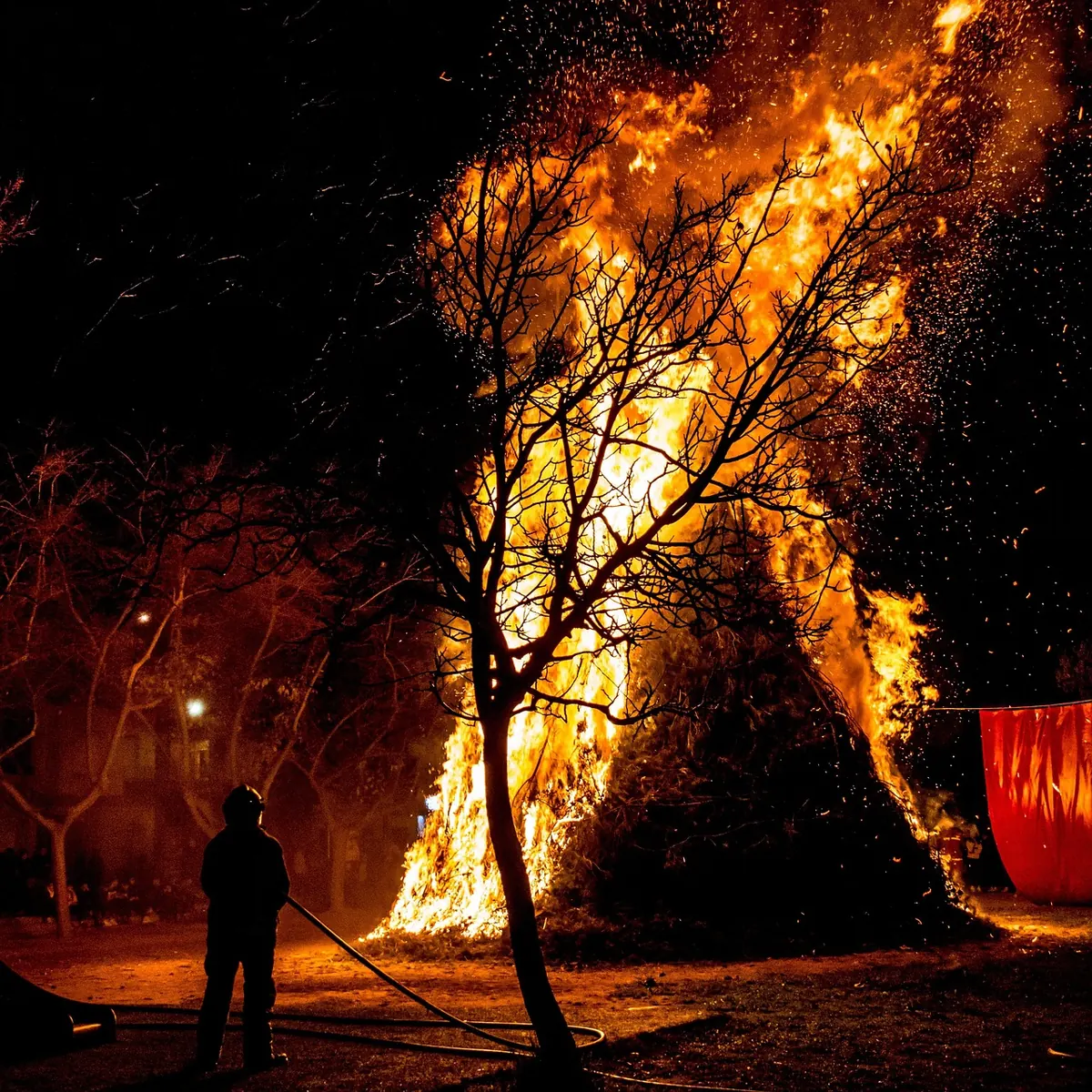
Photo: JoanjoCastello / Pixabay
Related Articles